Tinnitus
Causes, Management, and Modern Therapeutic Interventions
Tinnitus is the perception of sound in one or both ears without an external source. It can present as buzzing, whistling, or a pulsating sound, significantly impacting quality of life. An accurate diagnosis is the first step toward relief.
What is Tinnitus?
Tinnitus is not a disease in itself, but a symptom of an underlying cause.
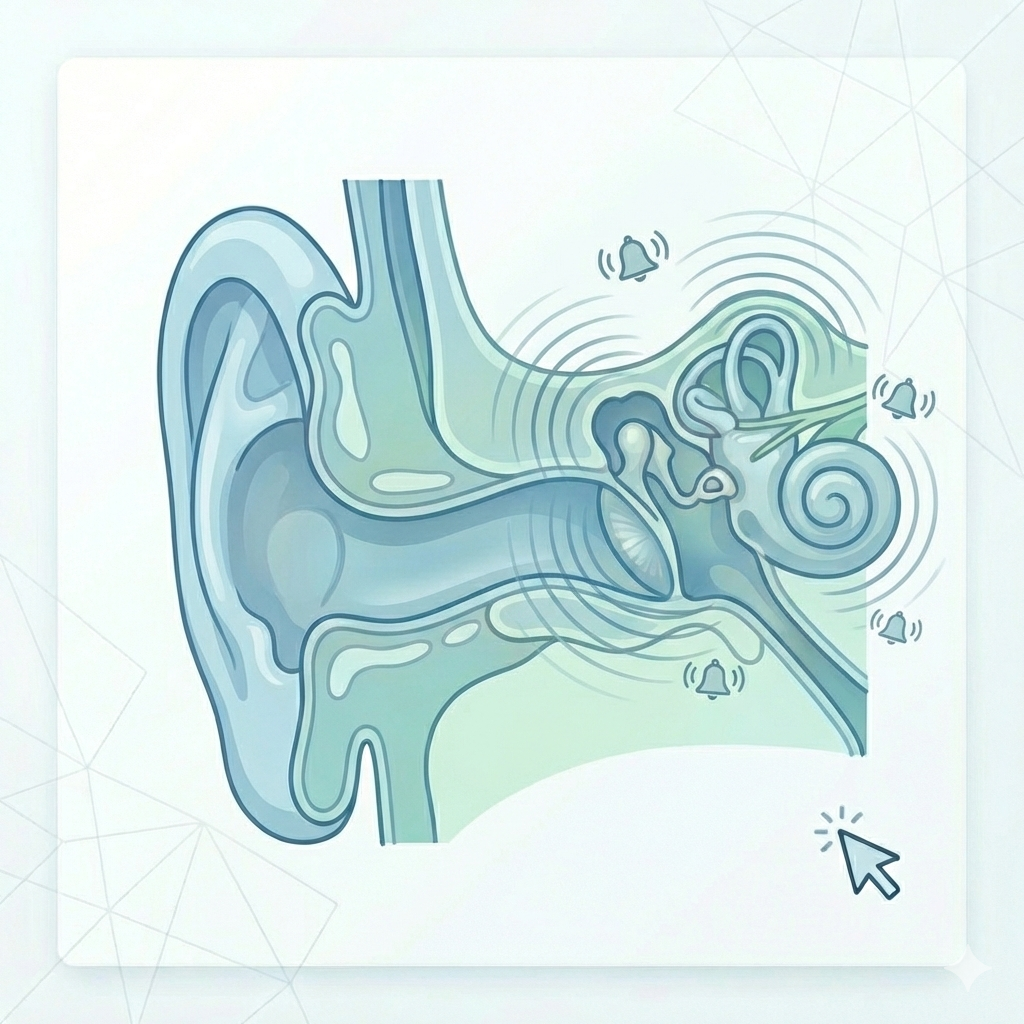
The sound is produced by a disruption in the auditory system (ear – auditory nerve – brain). It is a subjective or objective acoustic perception often described as buzzing or whistling, occurring in the absence of an external stimulus.
How does tinnitus manifest?
Buzzing, whistling, humming, or ringing
Localized in one or both ears
Sleep disturbances and concentration
Associated hearing loss or ear pressure
High anxiety, tension, or irritability
Possible dizziness or vertigo
Continuous or pulsatile sound
Worsening in complete silence
How is it diagnosed?
The diagnostic approach is personalized and includes:
- → Comprehensive medical history
- → Clinical ear examination (Otoscopy)
- → Full audiological evaluation
- → Imaging or vascular assessment
When to visit an ENT?
Immediate medical evaluation is required when:
- → Tinnitus appears suddenly
- → Sound is perceived in only one ear
- → Accompanied by sudden hearing loss
- → Tinnitus is pulsatile (heartbeat rhythm)
- → Associated with dizziness or instability
How is it managed?
Causal Therapy
Aims to eliminate the underlying condition triggering the sound.
- → Earwax removal or ear infection treatment
- → Use of hearing aids
- → Targeted pharmacological therapy
Retraining & Relief
Focuses on reducing distress and improving quality of life.
- → Sound Therapy (White noise)
- → Stress management and counseling
- → Improving sleep hygiene
Frequently Asked Questions
Is tinnitus dangerous?
▼
Does tinnitus ever go away?
▼
Is tinnitus related to stress?
▼
Are you suffering from tinnitus?
A comprehensive ENT and audiological evaluation is the first and most important step.
ENT Clinic – 16 Kapetan Chrona St., Neo Psychiko (Near Katehaki Metro Station)
contact@festas-orl.gr
16 Kapetan Chrona St.