
Otitis
When ear pain requires professional attention
Otitis is an inflammation of the ear and one of the most common causes of earache in both children and adults. Depending on the location, it can range from mild to requiring immediate medical intervention. A proper diagnosis by an ENT specialist is key to rapid relief and the prevention of complications.
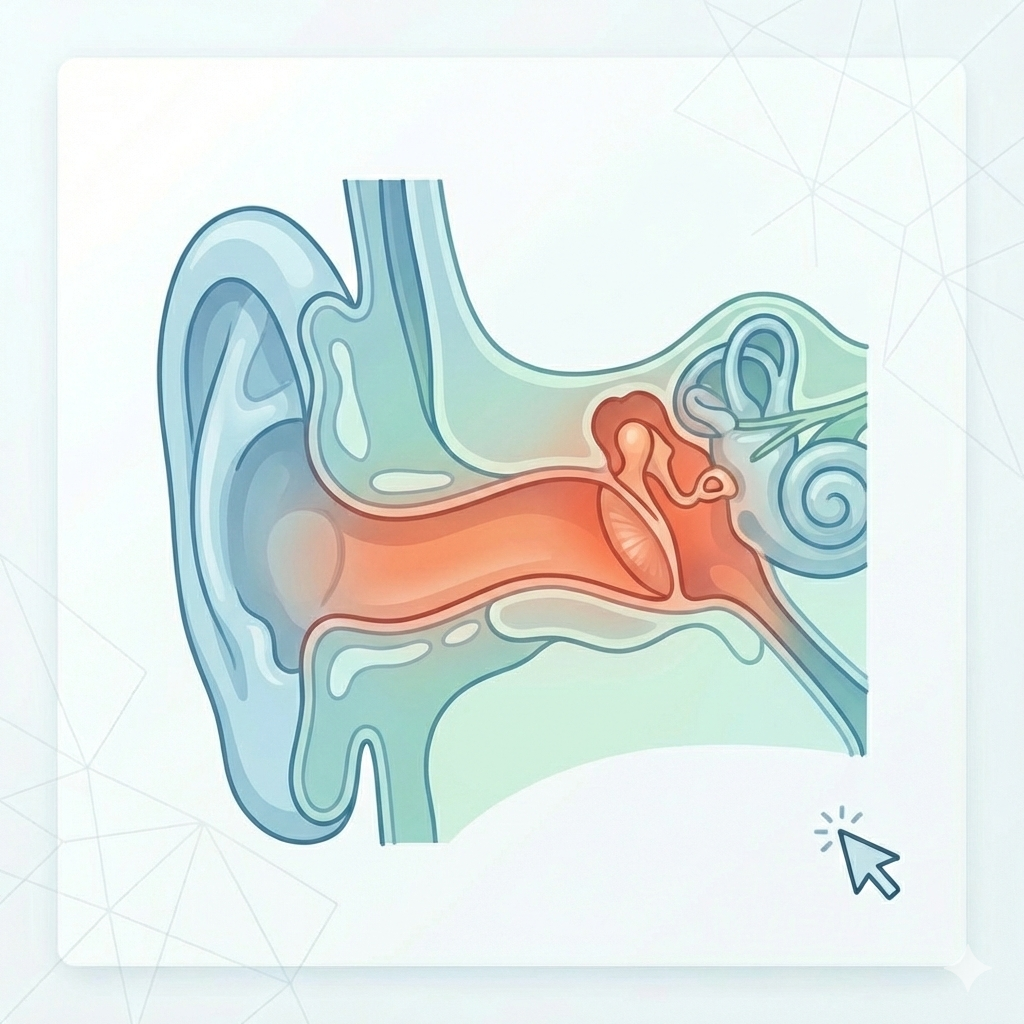
What is Otitis?
Otitis is an inflammation of the ear and is classified into three main types based on its location:
Inflammation of the outer ear canal. It is often associated with moisture (“swimmer’s ear”), trauma from cotton swabs, or bacterial and fungal infections.
Inflammation behind the eardrum, usually occurring as a complication following a viral infection or a cold. It is particularly common in children but also occurs in adults.
Fluid collection in the middle ear without intense pain or fever. The primary symptoms are hearing loss and a feeling of “fullness” or blockage in the ear.
What are the symptoms?
Severe ear pain (sharp or pulsating)
Hearing loss or a feeling of “fullness”
Fluid or pus discharge (otorrhea)
Fever and general malaise
Dizziness, instability, or vertigo
Tinnitus (ringing or buzzing in the ear)
In Children: Restlessness, excessive crying or irritability
In Children: Constant pulling or rubbing of the ear
Diagnosis & ENT Consultation
How is it diagnosed?
The diagnostic process is quick and painless, focusing on clinical findings:
- 1. Otoscopy: Visual inspection of the ear canal and eardrum.
- 2. Tympanometry: Assessment of middle ear pressure and fluid.
- 3. Audiological Testing: Hearing evaluation for chronic cases.
- 4. Clinical Exam: Nasal and nasopharyngeal evaluation.
Indications for an ENT visit
Immediate medical evaluation is recommended if:
- • Ear pain persists for more than 24–48 hours
- • Fever, dizziness, vertigo, or instability occurs
- • Fluid or pus discharge is observed from the ear
- • Hearing loss persists or infections are recurrent
- • Infants or young children show signs of severe distress
How is it treated?
External Otitis
- → Topical drops & canal cleaning
- → Strict avoidance of water
Acute Middle Otitis
- → Analgesics & Antipyretics
- → Antibiotics (when indicated)
- → Nasal decongestant therapy
Otitis with Effusion
Requires monitoring and nasal therapy. If the fluid persists:
- → Fluid drainage (myringotomy)
- → Placement of ventilation tubes
- • Progression to chronic otitis
- • Risk of permanent hearing loss
- • Spontaneous eardrum perforation
- • Mastoiditis (a rare but serious complication)
ENT Clinic – 16 Kapetan Chrona St., Neo Psychiko
contact@festas-orl.gr
16 Kapetan Chrona St.