
Oropharyngeal
Cancer
Symptoms, Diagnosis & Treatment
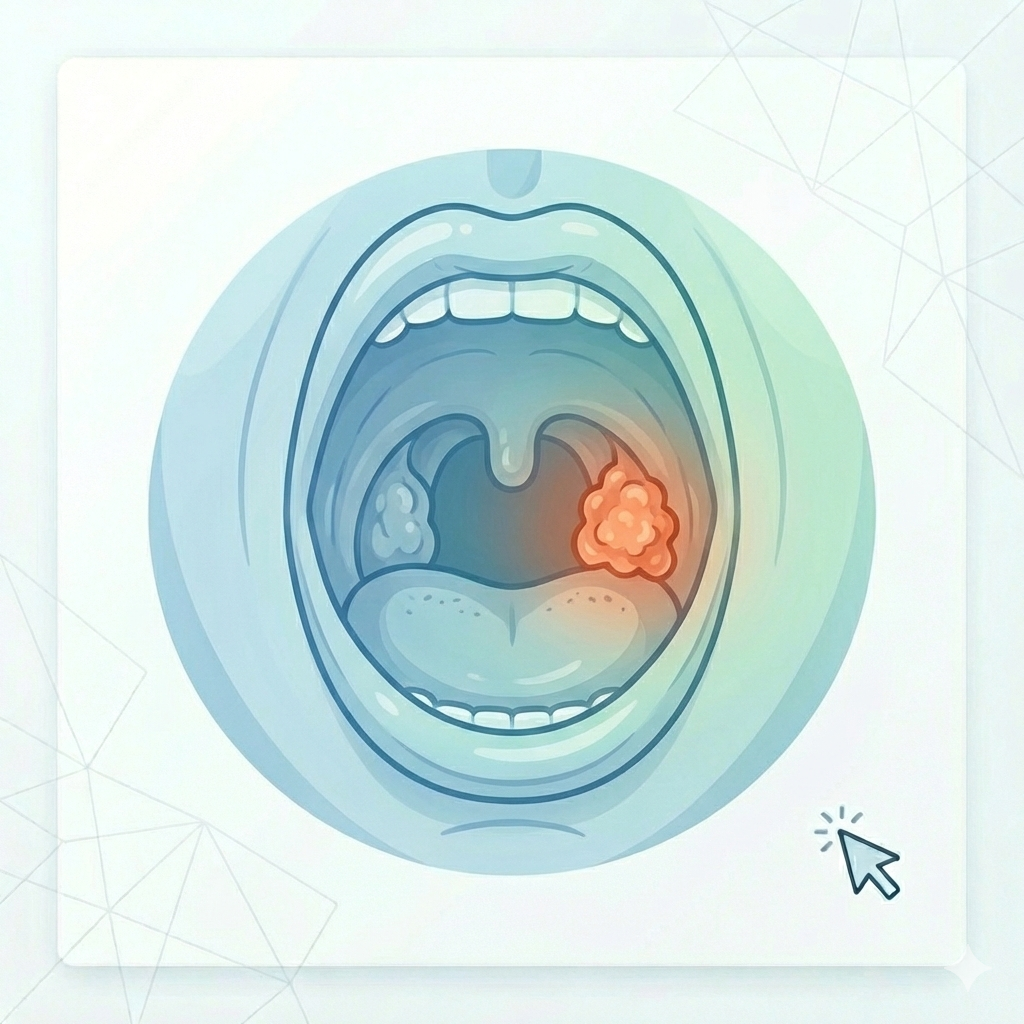
Oropharyngeal cancer is a serious but often treatable disease, especially when diagnosed at an early stage. Symptoms such as a persistent sore throat, difficulty swallowing, or swollen lymph nodes in the neck should not be ignored. Early evaluation by an ENT specialist is crucial.
Nasal Congestion
Snoring
Headache
Nasal Discharge
Shortness of Breath
Nosebleed
Clinical Indications
When is an immediate evaluation required?
- • Symptoms persisting for more than 2–3 weeks
- • Unilateral throat pain or referred ear pain
- • Painless swelling (mass) of a neck lymph node
- • History of smoking or HPV exposure in combination with new symptoms
Causes & Risk Factors
1
Smoking & Alcohol
Traditional risk factors that act synergistically, multiplying the probability of carcinogenesis.
2
HPV Infection
A primary cause of oropharyngeal cancer (tonsils, base of tongue) – associated with the p16+ biomarker.
3
EBV & Chronic Irritation
Epstein-Barr virus (mainly for nasopharyngeal cancer) and chronic mechanical or chemical irritation.
4
Age & Gender
Increased incidence in men and individuals over 45–50 years of age.
Clinical Presentation
Symptoms Requiring Evaluation
✓
Persistent throat pain (sore throat)
Persistent throat pain (sore throat)
✓
Difficulty or pain when swallowing
Difficulty or pain when swallowing
✓
Sensation of a foreign body or “lump”
Sensation of a foreign body or “lump”
✓
Ear pain (without otological findings)
Ear pain (without otological findings)
✓
Nasal obstruction or bleeding
Nasal obstruction or bleeding
✓
Swollen cervical lymph nodes
Swollen cervical lymph nodes
✓
Hoarseness or unexplained voice change
Hoarseness or unexplained voice change
✓
Unexplained weight loss
Unexplained weight loss
Medical Care
Diagnosis & Treatment Plan
DIAGNOSIS & EXAMINATION
How is the diagnosis made?
The correct diagnosis is based on an organized and detailed investigation:
- 1. Detailed Medical History: Evaluation of risk factors.
- 2. Pharyngoscopy: High-definition flexible imaging.
- 3. Biopsy: Histological identification of the lesion.
- 4. Imaging: CT or MRI of the neck area.
- 5. Staging: Determination of the disease extent.
- 6. HPV / p16 Testing: When indicated for prognosis.
TREATMENT
Therapeutic Options
Treatment is personalized and designed by a multidisciplinary team (Tumor Board).
Early Stages
- • Surgical resection (Endoscopic or Open)
- • Radiotherapy aiming at tissue preservation
Advanced Stages
- • Combined Radiotherapy + Chemotherapy
- • Surgical management ± Neck Dissection
- • Swallowing & Speech Rehabilitation
Why early diagnosis is crucial
- • Higher cure rates
- • Less aggressive treatments
- • Better preservation of speech & swallowing
- • Significantly better quality of life
ENT Clinic – 16 Kapetan Chrona St., Neo Psychiko
+30 6931 045 380
contact@festas-orl.gr
16 Kapetan Chrona St.
contact@festas-orl.gr
16 Kapetan Chrona St.