
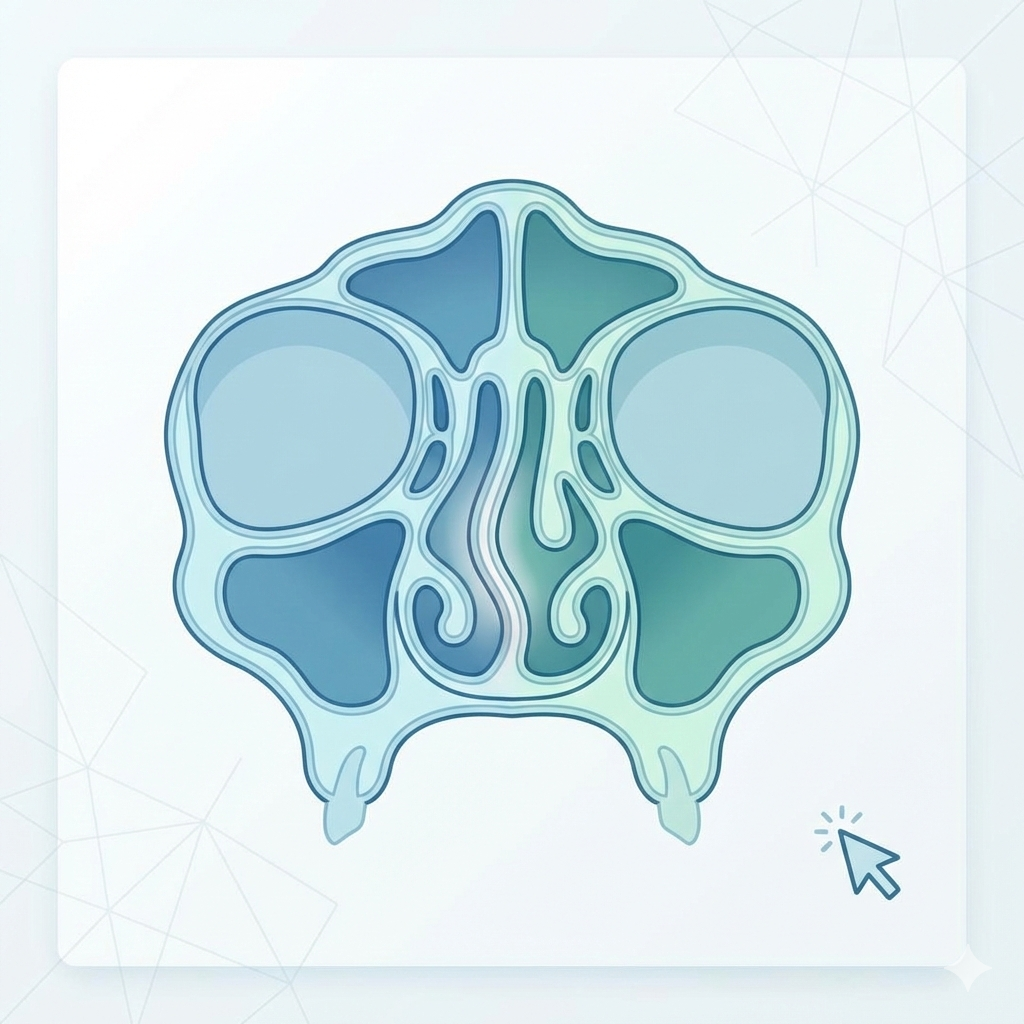
Definition
What is a deviated septum?
The nasal septum is the wall that divides the nose into two chambers. When it deviates from the center, it causes
nasal septal deviation – commonly known as a deviated septum.
The deviation can be mild or severe, affecting breathing differently in each nostril. Many patients have become accustomed to the symptoms and do not realize they are caused by the septum.
What symptoms does it cause?
Permanent or alternating nasal obstruction
Difficulty breathing through the nose
Snoring or poor sleep quality
Frequent sinus infections (sinusitis)
Headaches or facial pressure
Nosebleeds (epistaxis)
Nasal dryness and irritation
Difficulty concentrating due to fatigue
Diagnosis & Treatment Criteria
How is it diagnosed?
A painless examination by an ENT specialist includes:
- → Detailed medical history
- → Clinical nasal examination
- → In-office nasal endoscopy
- → CT scan (only if necessary)
When is treatment needed?
Intervention is recommended when:
- → Nasal breathing is difficult
- → Severe snoring is present
- → Frequent sinus infections occur
- → Daily quality of life is affected
- → Medication offers no relief
How is it treated?
Medical Approach
For mild symptoms – manages the condition without correcting the anatomy.
- → Nasal steroid sprays
- → Antihistamines
- → Nasal saline washes
Septoplasty – The Solution
Permanently restores normal respiratory function and quality of life.
- → No external incisions
- → Combined with turbinate reduction
- → Immediate, permanent results
🔍 MYTH:
“After surgery, the septum can become deviated again” — This is not true. The results of septoplasty are permanent.
Frequently Asked Questions
Can a deviated septum be corrected without surgery?
▼
Does the surgical treatment change the appearance of the nose?
▼
Is the procedure painful?
▼
Difficulty breathing through your nose?
A simple ENT check-up can provide a permanent solution.
ENT Clinic – 16 Kapetan Chrona St., Neo Psychiko
contact@festas-orl.gr
16 Kapetan Chrona St.