
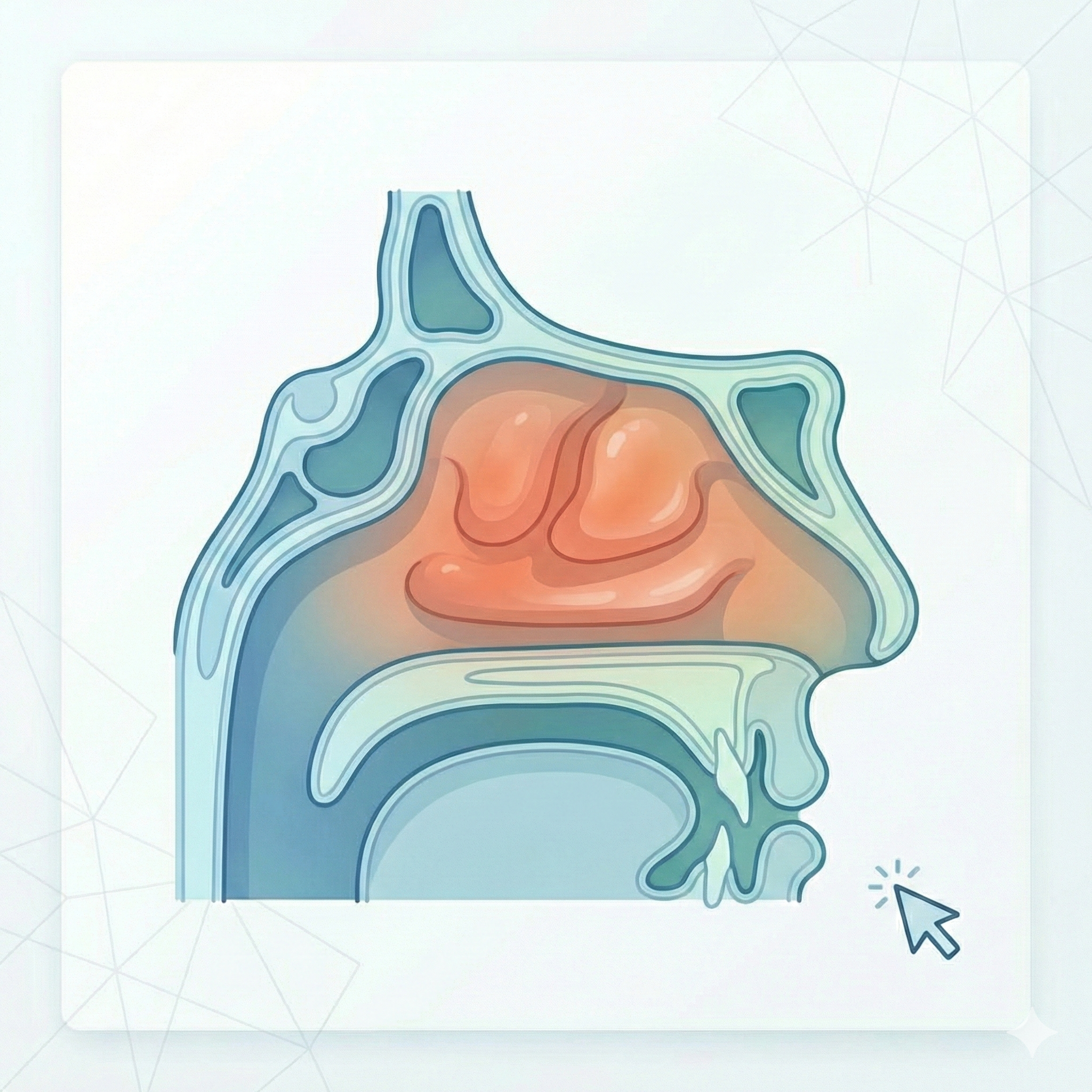
Congestion
Snoring
Headache
Discharge
Dyspnea
Nosebleeds
Definition
What is Rhinitis?
It is a reaction of the nasal mucosa caused by various factors, leading to:
- Nasal congestion (stuffiness)
- Runny nose (rhinorrhea)
- Sneezing
- Nasal itching
Correctly distinguishing the type of rhinitis is crucial for selecting the appropriate treatment.
Type A
Allergic Rhinitis
Caused by an allergic reaction to substances such as pollen, dust mites, animal dander, or mold.
Characteristics
- ✓ Intense sneezing
- ✓ Clear nasal discharge
- ✓ Itching of the nose & eyes
- ✓ Watery eyes (tearing)
- ✓ Seasonal or year-round occurrence
Type B
Non-Allergic Rhinitis
Unrelated to allergic mechanisms. Triggered by temperature changes, pollution, hormonal shifts, or stress.
Symptoms
- ✓ Persistent or alternating congestion
- ✓ Nasal discharge without itching
- ✓ Absence of sneezing
- ✓ Frequently negative allergy tests
INDICATIONS FOR EVALUATION
When to visit an ENT?
A full clinical evaluation is recommended when:
- → Symptoms persist for several weeks
- → Persistent daily congestion occurs
- → OTC sprays offer no relief
- → Frequent sinusitis or headaches
- → Spray overuse is suspected
DIAGNOSIS & EXAMINATION
How is the diagnosis made?
We accurately distinguish between allergic and non-allergic forms via:
- → Detailed medical history review
- → Clinical examination & rhinoscopy
- → Modern nasal endoscopy
- → Specialized allergy testing
Accurate differential diagnosis is key to avoiding unnecessary medication.
TREATMENT OPTIONS
How is Rhinitis treated?
CONSERVATIVE CARE
Medical Approach
An individualized plan to control inflammation and manage symptoms effectively.
- → Nasal corticosteroid sprays
- → Antihistamines (allergic forms)
- → Regular nasal irrigations
- → Trigger avoidance strategies
SPECIALIZED SOLUTIONS
Targeted Interventions
Addressing complications and chronic anatomical structural issues.
- → Decongestant spray cessation
- → Immunotherapy (allergy specific)
- → Surgical anatomical correction
“Identifying the correct type of rhinitis is the path to definitive relief.”
FAQ
Frequently Asked Questions
Can allergic rhinitis be permanently cured?
▼
Allergic rhinitis typically does not “disappear” completely, but it can be managed very effectively with the appropriate treatment, allowing for a daily routine without limitations.
Are nasal sprays addictive?
▼
Corticosteroid sprays (therapeutic) are not addictive. In contrast, decongestant sprays cause addiction and “rhinitis medicamentosa” when used for more than 5–7 days.
Can rhinitis lead to sinusitis?
▼
Yes, this is very common. Chronic congestion and inflammation obstruct the drainage of the paranasal sinuses, significantly increasing the likelihood of acute or chronic sinusitis.
ENT Clinic – 16 Kapetan Chrona St., Neo Psychiko
+30 6931 045 380
contact@festas-orl.gr
16 Kapetan Chrona St.
contact@festas-orl.gr
16 Kapetan Chrona St.