What are Adenoids?
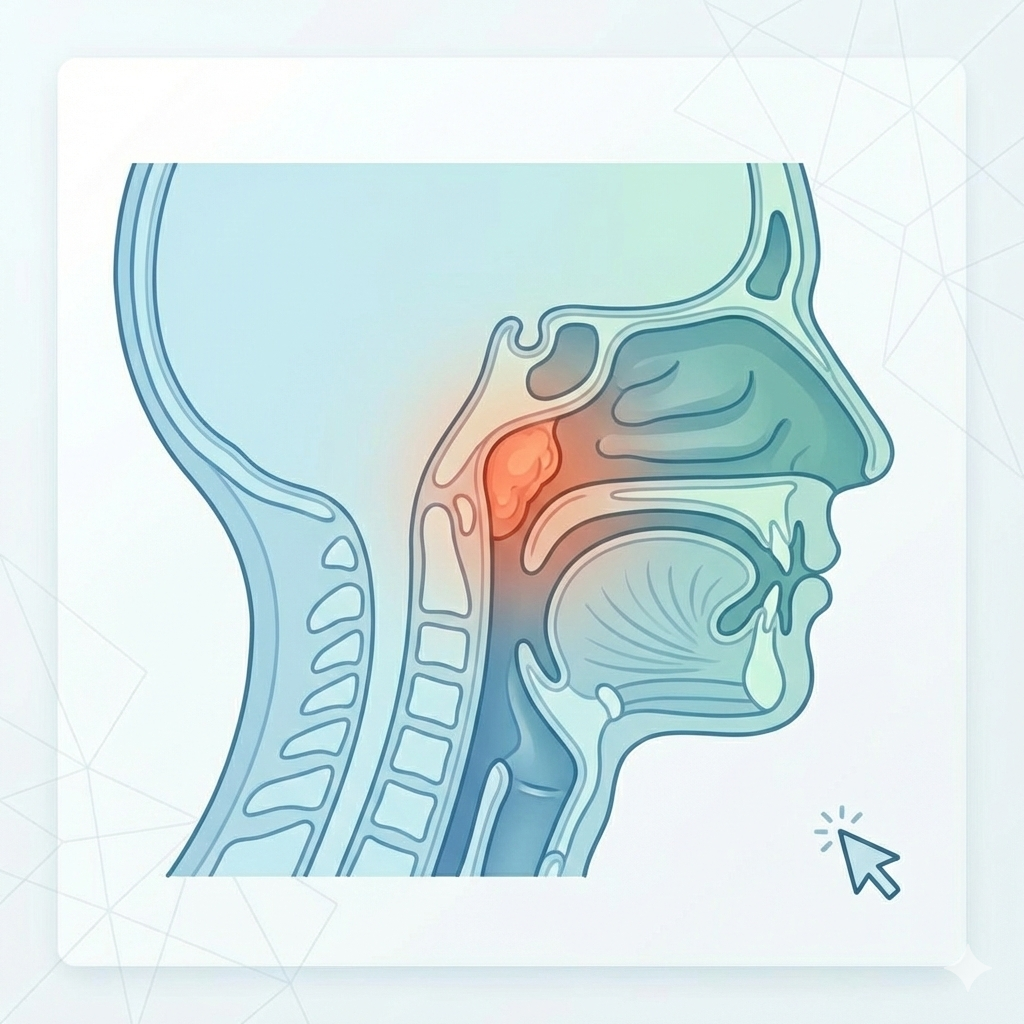
Adenoids, also known as adenoid vegetations, are lymphoid tissue located behind the nose, in the nasopharynx.
They are a natural part of the immune system in children, but when they become excessively enlarged (adenoid hypertrophy), they can cause significant problems with breathing, hearing, and even the child’s general development and dental health.
What symptoms does it cause?
Persistent mouth breathing
Snoring or restless sleep
Breathing pauses during sleep (Apneas)
Frequent ear infections or fluid in ears
Hearing loss
Nasal speech
Fatigue
Drowsiness or irritability
How is it diagnosed?
Diagnosis is performed by an ENT specialist through a brief, painless examination and includes:
- → Detailed medical history
- → Clinical nasal examination
- → In-office nasal endoscopy
- → Audiological evaluation (if necessary)
When is treatment needed?
Treatment is not always required. Intervention is necessary when:
- → The child cannot breathe through the nose
- → Severe snoring with sleep apnea is present
- → Frequent ear infections occur
- → There is hearing loss
- → Development or sleep is affected
How is it treated?
Medical Approach
Medications do not always reduce the size of the adenoids.
- → Nasal sprays
- → Allergy management
- → Monitoring/Observation
Adenoidectomy – Permanent Solution
Adenoidectomy is the definitive solution when significant symptoms are present. Often combined with tonsillectomy or ear tubes (grommets), if necessary.
- → No external incisions
- → Performed under General Anesthesia
- → Permanent results
Frequently Asked Questions
Do adenoids “go away on their own”?
▼
Is the surgery safe?
▼
Will my child get sick more often after surgery?
▼
Does your child snore or breathe through their mouth?
Don’t ignore it. A timely ENT check-up makes all the difference.
ENT Clinic – 16 Kapetan Chrona St., Neo Psychiko
contact@festas-orl.gr
16 Kapetan Chrona St.